
The Finish Line We Didn't Know We Needed
Tanvir Ahmed
Editor In-Chief
Tanvir Ahmed is a technology professional, endurance sports enthusiast, A casual runner and cyclist, His work in building digital platforms for Bangladesh's active sports community reflects a broader conviction: that movement is a right, not a privilege, and that technology can help dismantle the logistical and social walls that keep people — off the road.
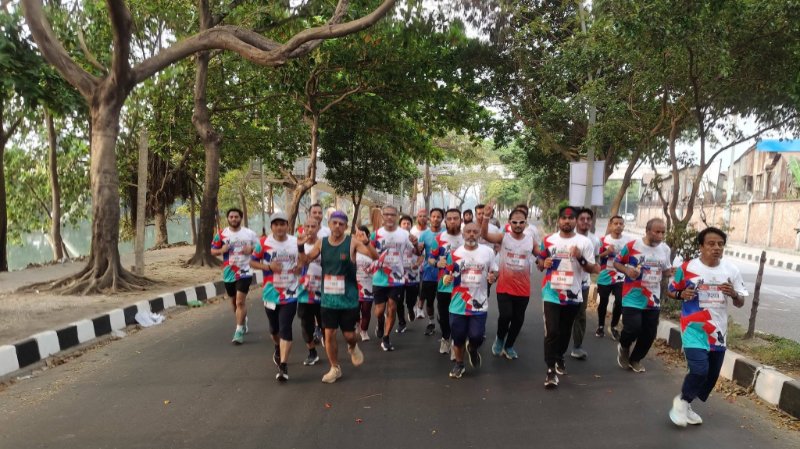
Look around at the start line of any running event — a 10K in Dhaka, a half marathon in Berlin, a trail race in the hills of Kathmandu. You'll find something that has quietly become rare in modern life: a crowd of strangers, standing side by side, breathing the same morning air, sharing the same nervous energy, all about to do something hard together. Nobody is looking at their phone.
The Finish Line We Didn't Know We Needed
How Running Events Are Rebuilding Human Connection in an Age of Digital Isolation
Look around at the start line of any running event — a 10K in Dhaka, a half marathon in Berlin, a trail race in the hills of Kathmandu. You'll find something that has quietly become rare in modern life: a crowd of strangers, standing side by side, breathing the same morning air, sharing the same nervous energy, all about to do something hard together.
Nobody is looking at their phone.
We Are More Connected Than Ever — and More Alone
The irony of our era is almost too obvious to state, yet we keep living it. We have more tools for connection than any generation in human history. Social media feeds us a constant stream of updates from hundreds of people we call "friends." Messaging apps let us reach anyone, anywhere, instantly. And yet, study after study, and if we're honest, our own lived experience, tells us that loneliness is rising.
The United States Surgeon General declared loneliness a public health epidemic in 2023. The UK appointed a Minister for Loneliness. In Bangladesh, rapid urbanization has pulled millions into dense cities where neighbors do not know each other's names. We sit in apartments stacked on top of one another, communicating with people thousands of miles away while ignoring the person on the other side of the wall.
Technology gave us reach but took away roots.
And into this void, quietly and consistently, running events have arrived — not just as athletic competitions, but as something that functions almost like a community ritual.
The Start Line as Sacred Space
There is something structurally different about a running event compared to nearly every other social experience on offer today.
You cannot scroll through a race. You cannot multitask. You cannot curate your appearance or choose your best angle. When the gun goes off, you are simply a body moving through space, alongside other bodies doing the same. Your job title, your follower count, your neighborhood — none of it matters at kilometer 16.
What does matter is the person next to you who just said, "Come on, keep going."
This is the magic that race organizers often talk about but rarely fully explain: running events create the conditions for genuine human contact. Not the performance of connection we practice on social media, but the real thing — shared effort, shared suffering, shared triumph.
Psychologists call this "shared adversity bonding." When people go through difficulty together, they form faster, deeper connections than they do in comfortable settings. It is the same principle that bonds soldiers, disaster survivors, and expedition teams. Running events democratize this experience. You don't need to climb Everest. You just need to show up on a Friday morning and put one foot in front of the other until you reach the finish line.
The Explosion of Running Events Is Not an Accident
The numbers tell a clear story. Road races, trail runs, fun runs, and mass participation events have multiplied dramatically across the world over the past two decades. In Asia alone, the growth has been staggering. India, China, South Korea, and Bangladesh have all seen explosive growth in community running events, with participation that spans gender, age, and socioeconomic background in ways few other sports can claim.
This is not a coincidence. It is a response to a need.
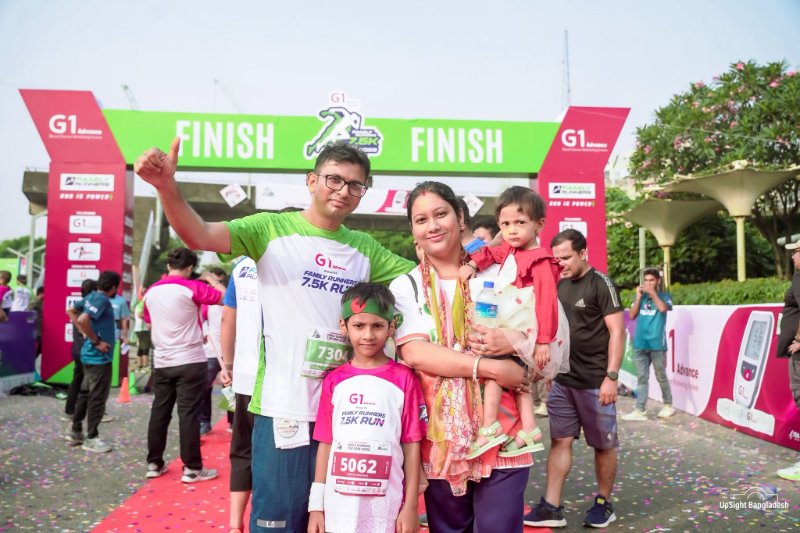
When a race is happening in Hatirjheel and a family shows up — mother, father, children — and crosses a finish line together, what has happened? On paper, they ran a few kilometers. In practice, they created a memory. They did something hard as a unit. They met other families doing the same thing. They belong, for a moment, to something larger than their apartment, their school, their workplace.
That experience is not trivial. It is, for many people, deeply nourishing in a way that another evening watching a screen simply cannot replicate.
Running Events Lower the Barrier to Belonging
One of the persistent challenges of community-building is that belonging often feels exclusive. Clubs have gatekeepers. Gyms can feel intimidating. Religious institutions are not for everyone. Neighborhoods are increasingly transient.
Running events are different. A 5K with a thirty-minute cutoff is designed to include people who walk most of it. A fun run has no cutoff at all. The entry cost is low. The dress code is a pair of sneakers. The only requirement is showing up.
This low barrier matters enormously. It means that a first-generation runner — someone whose family never considered running a sport — can participate on the same start line as a seasoned athlete. And crucially, that interaction changes both of them. The seasoned runner who cheers on a first-timer discovers something about generosity. The first-timer who sees people of every shape and age finishing a race discovers something about possibility.
Community is not built in grand gestures. It is built in these small, accumulated moments of recognition: I see you. I am like you. We did this together.
Women, Running, and the Reclaiming of Public Space
Nowhere is the community power of running events more visible — or more political — than in the increasing participation of women, particularly in societies where women's access to public space has historically been constrained.
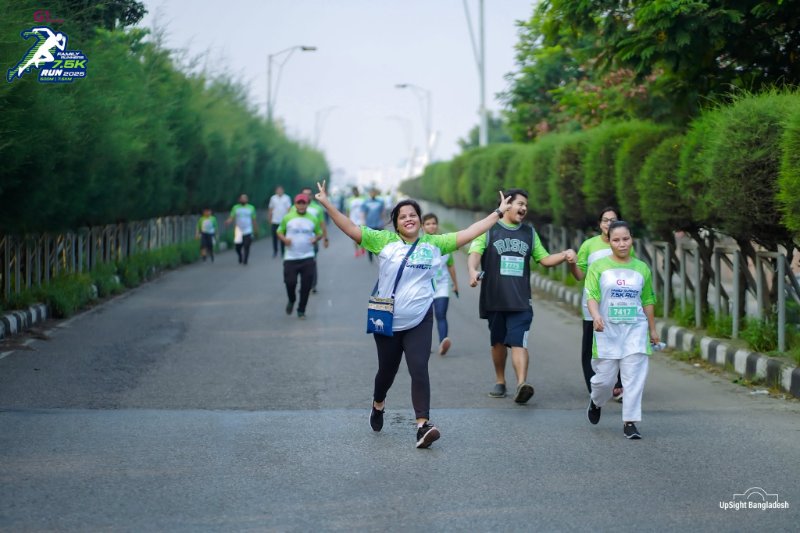
In Bangladesh, women running in public was, not long ago, considered unusual at best and inappropriate at worst. Yet today, female runners are a visible, powerful presence at organized events across Dhaka and beyond. They run in groups for safety. They mentor each other. They post their finish times with pride. They show up for each other in ways that extend far beyond running.
What a running event does for women, especially in conservative or transitioning societies, is provide a legitimate, socially sanctioned reason to occupy public space. The race bib is a kind of permission slip — though the women who wear them would rightly argue they never needed permission. The event creates a context where a woman running is not transgressive but celebrated.
The ripple effects of this are significant. When a young girl watches her mother cross a finish line, something shifts. When a woman sees a hundred women who look like her running through city streets, her sense of what is possible for her own body and her own life expands. This is community-building at the most fundamental level — the level of identity and self-belief.
Digital and Physical: Allies, Not Enemies
It would be unfair not to acknowledge the role that technology and social media have played in the running boom itself. Strava, running apps, and online communities have connected runners across geographies, helped beginners find training plans, and allowed race organizers to reach new audiences. WhatsApp groups keep running clubs coordinated. Instagram reels of finish-line celebrations inspire people who have never raced to sign up.
The tools are not the problem. The problem is when the tools replace the experience rather than amplify it.
The healthiest running communities — and the most successful running events — use technology as a bridge to get people to the start line, and then trust the physical experience to do what it has always done: make people feel alive, connected, and part of something real.
A post-race photo shared on social media is meaningful because there was a real race. The memory exists in the body, not just the feed.
What Race Organizers Are Really Building
To the race directors, event managers, and running club leaders reading this: you may think you are in the logistics business. Permits, bibs, timing chips, water stations, medals, announcements, results.
You are not. You are in the community business.
Every event you organize is a gathering place. Every finish line you set up is a site of transformation — small and large. The runner who crosses it in 35 minutes and the one who crosses it in 75 minutes are both doing something that matters. They are proving something to themselves. And they are doing it with other people.
That shared experience — that common story — is the raw material of community. It is what neighbors talk about when they see each other later. It is what draws people back next year. It is what makes someone pick up the phone and say, "I signed us both up. Let's train together."
In a world that keeps offering us more ways to be alone together, the running event insists on something older and more essential: that we show up, in person, and move through difficulty side by side.
Lace Up, Show Up
The finish line of a running event is one of the few places left in modern life where strangers cheer for strangers. Where a person who has never met you will hold out a cup of water and say, "You're almost there." Where the person who finishes last still gets applause.
We need these spaces. We need these rituals. We need the experiences that pull us out of our screens and our isolation and remind us that we are, fundamentally, a social species — one that has always moved better, and lived better, in community.
So lace up. Sign up. Show up.
Not just for the race. For everything that happens around it.