
She Runs Anyway
Tanvir Ahmed
Editor In-Chief
Tanvir Ahmed is a technology professional, endurance sports enthusiast, A casual runner and cyclist, His work in building digital platforms for Bangladesh's active sports community reflects a broader conviction: that movement is a right, not a privilege, and that technology can help dismantle the logistical and social walls that keep people — off the road.
That joy is meaningful, whether she intends it to be or not. Every woman who runs in public broadens the imagination of every girl who sees her. The girl on the footpath watching a woman run does not dwell on social taboos. She thinks: that looks like it feels good. I wonder if I could do that.
Because every woman who runs makes it a little more possible for the next one to start.
A woman lacing up her shoes in Bangladesh is doing something quietly bold.
Before she reaches the starting line, she has already faced challenges that no race director created.
She has stood up to a mother who called it behaya — shameless. She has laughed off a neighbour who said a woman's legs should not be seen on the street. She has ignored uncles at family gatherings who asked, partly joking and partly serious, whether her husband knows she goes out alone in the early morning. She has dealt with comments about her body, her modesty, and her izzat — the untranslatable burden of family honour that Bangladeshi women are expected to carry while standing completely still.
Then she ties her laces and goes anyway.
Running is perhaps the most accessible sport ever created. It costs almost nothing. It requires no team, no court, no coach. All it asks for is a body willing to move. Yet for a woman in Bangladesh, that simple act of motion is filled with countless unseen objections. The streets belong to men — not by law, but by long-standing tradition. A woman jogging through Dhanmondi or Mirpur in the morning will be stared at. She will be followed. She will hear comments ranging from curiosity to cruelty. With every kilometre, she senses that her presence in public space raises questions others feel entitled to answer for her.
She may not have clothes suitable for running — either because the shops do not carry her size, or because buying them would require explanations she is too weary to provide. She may not find a safe route after six in the morning, when the crowds thin out and the staring intensifies. She may not even have the time at all — because she needs to manage the house, feed the children, and rest is a luxury she has never been told she deserves.
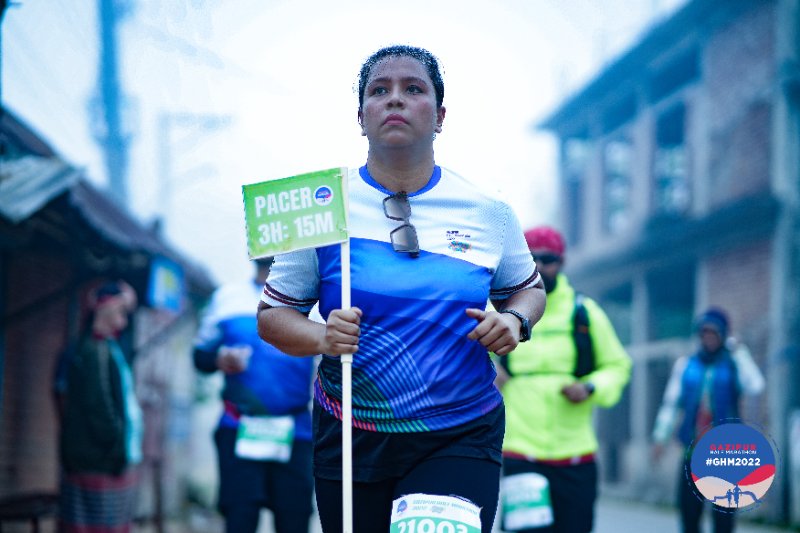
And yet, she runs.
She runs in Hatirjheel at five a.m., before the city wakes up and notices her. She runs in salwar kameez because it is what she has and what she feels comfortable in. She participates in women-only races that have slowly and quietly begun to appear on the Dhaka calendar. When she crosses the finish line, the look on her face is not one of defiance. It is something simpler and more powerful: joy. Pure, uncomplicated joy.
That joy is meaningful, whether she intends it to be or not. Every woman who runs in public broadens the imagination of every girl who sees her. The girl on the footpath watching a woman run does not dwell on social taboos. She thinks: that looks like it feels good. I wonder if I could do
that.
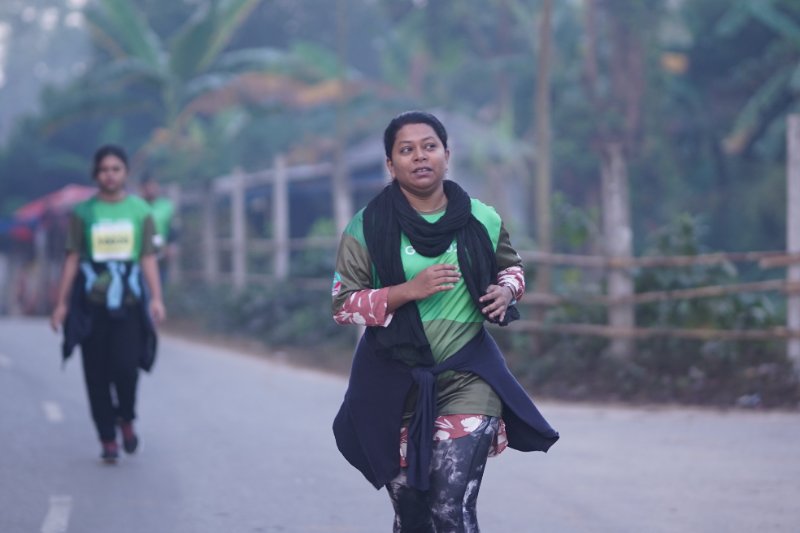
There are women in this country — in Dhaka, in Chittagong, and in smaller towns that will not appear on any race results page — who have been running for years without a community, recognition, or expectation of either. They run because their bodies want to, and they say yes. This private commitment, maintained against disapproval, is a type of courage that no medal can fully express.
The running community in Bangladesh is growing. Various events have begun to create spaces — real, physical, public spaces — where women are not just allowed but welcomed. That is genuine progress. It must be stated clearly and without qualification.
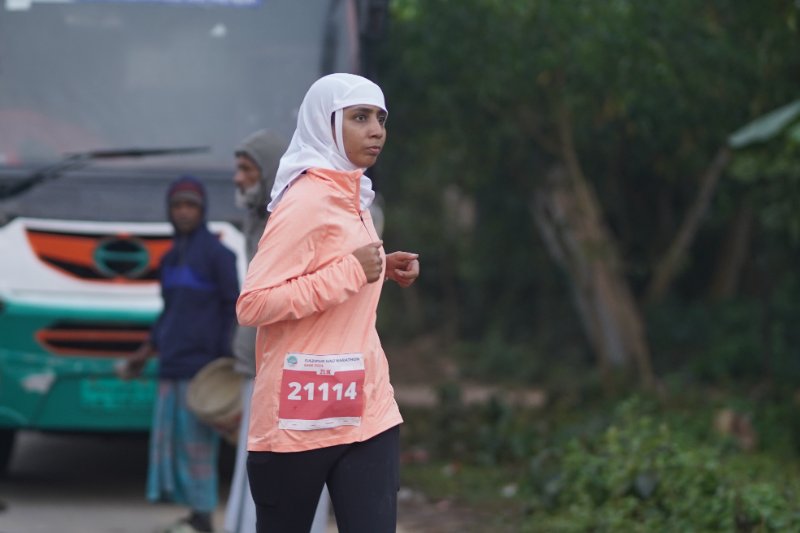
But progress on the course is still outpaced by resistance off it. A woman finishing a half marathon may return to a family that does not ask how it went, or worse, wishes she had stayed home. The finish line is not the end of her run. The tougher kilometres come after.
What would it take to change this? Not a revolution. Just a small, ongoing shift — fathers who wake up early to drop their daughters at the park; husbands who boast about their wife's speed just as they would about their son's grades; schools that encourage girls to stay on the track past puberty; brands that create running clothes for Bangladeshi women and sell them without embarrassment; and race organisers who establish women's categories not as an afterthought, but as an essential part of every event.
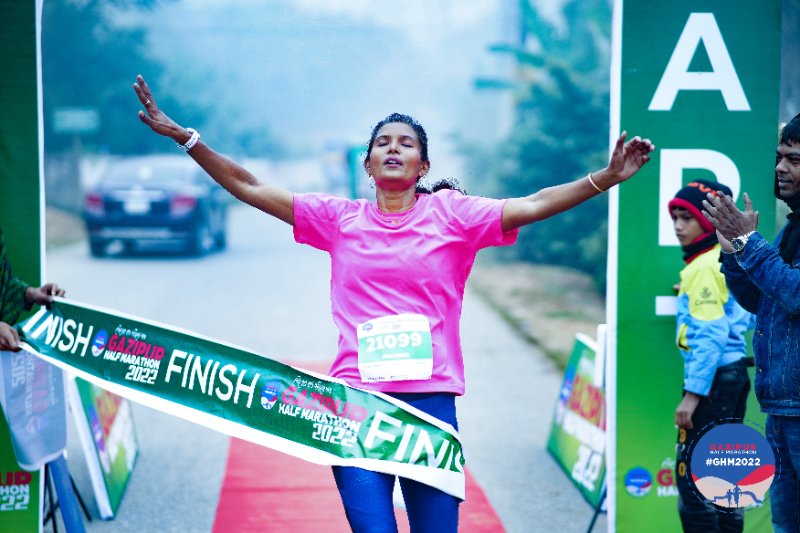
And the rest of us? We can simply stop making it harder. We can stop staring. Stop commenting. Stop treating a woman in motion as a spectacle that demands our opinion. She is not running for you. She is running for herself. That, in the end, is the whole point — and perhaps the most groundbreaking thing she could do.
Because every woman who runs makes it a little more possible for the next one to start.